A commercial property owner recently called us after noticing water collecting near the side of a building every time it rained. At first, they thought it was simply a clogged drain. But after evaluating the site, we discovered the issue went much deeper. Runoff from nearby pavement had slowly started eroding the surrounding soil, pushing water toward the foundation and weakening part of the slope nearby.
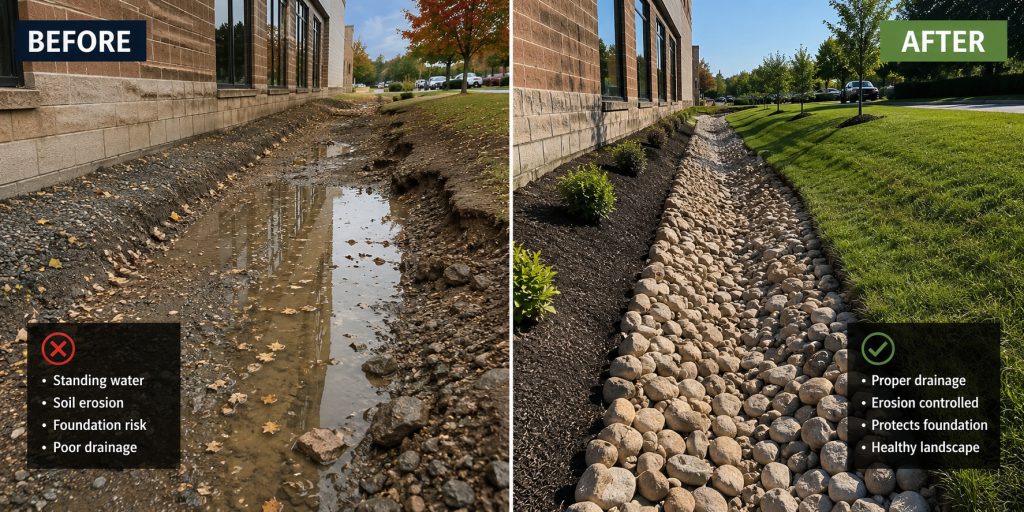
The surprising part was how long the problem had been developing before anyone noticed it.
We are seeing more situations like this across Pennsylvania. Stronger storms, aging infrastructure, expanding paved surfaces, and changing development patterns are creating drainage and runoff problems many property owners never dealt with years ago.
At All County Associates, these are some of the most common concerns we are helping property owners solve right now.
Featured Snippet
Drainage and runoff problems are becoming more common across Pennsylvania due to heavier rainfall, increased paved surfaces, stormwater overflow, erosion, and aging drainage infrastructure. Professional stormwater management, erosion control, grading, and drainage planning help property owners prevent flooding, property damage, and long-term land instability.
Why Drainage Problems Are Increasing
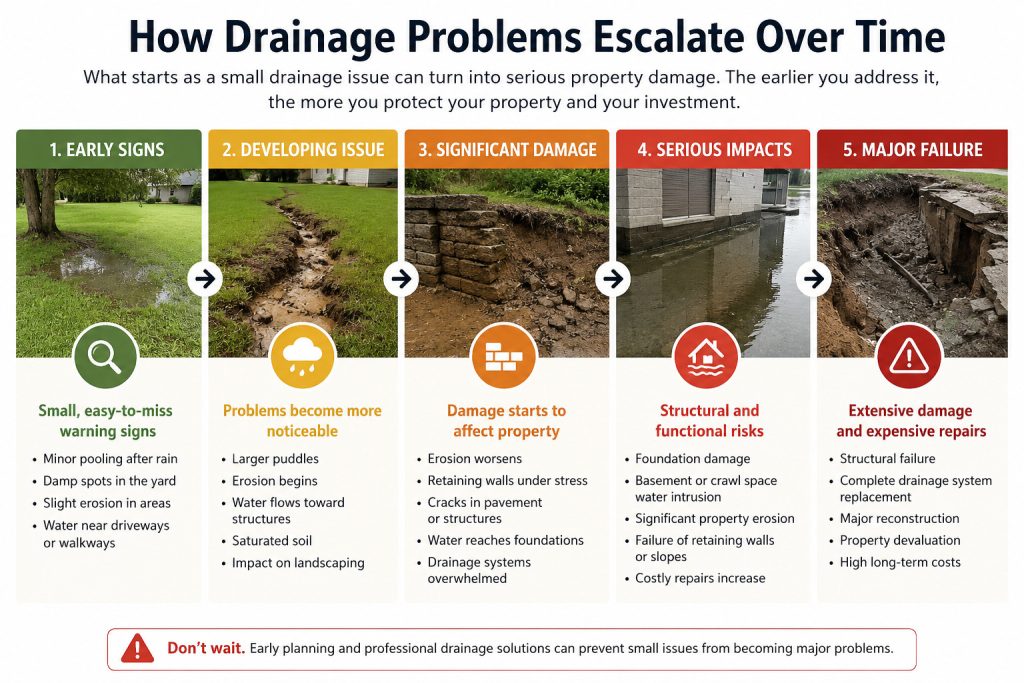
Many people assume drainage issues happen suddenly. Most do not. They usually develop slowly over time. A little more runoff each season, more standing water after storms. A little more soil movement around retaining walls, parking lots, slopes, or foundations.
One of the biggest contributors is the increase in hard surfaces such as:
- Parking lots
- Roofs
- Driveways
- Sidewalks
- Commercial developments
- Road expansions
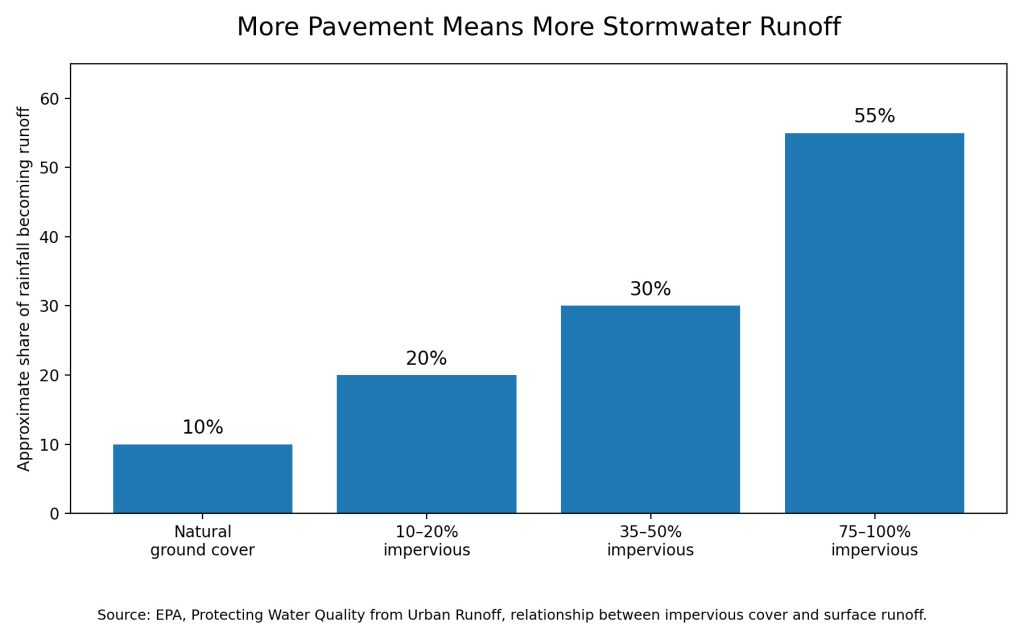
When rainwater cannot naturally soak into the ground, it moves faster across surfaces and creates runoff problems. According to the United States Environmental Protection Agency, stormwater runoff increases significantly when natural ground is replaced by impervious surfaces like asphalt and concrete.
That runoff often leads to:
- Erosion
- Flooding
- Standing water
- Soil instability
- Retaining wall pressure
- Foundation concerns
- Roadway damage
- Overwhelmed drainage systems
The Services Property Owners Need Most Right Now
Stormwater Management
Stormwater management has become one of the most important parts of protecting both residential and commercial properties. Poor runoff control can affect neighboring properties, parking areas, roads, landscaping, and structural stability. Pennsylvania municipalities continue increasing focus on stormwater planning and runoff reduction due to growing flood risks and infrastructure strain.
Drainage Planning and Correction
Many drainage problems begin with improper grading or outdated drainage systems. We regularly evaluate properties where water is unintentionally being redirected toward structures instead of safely away from them. Sometimes the fix is relatively small. Other times, we uncover much larger land stability concerns hiding beneath the surface.
Erosion Control
Erosion rarely starts as a dramatic event. Most erosion begins gradually and worsens season after season.
We often see:
- Slope erosion
- Washouts
- Exposed roots
- Soil movement near retaining walls
- Damaged embankments
- Sediment runoff near commercial properties
The earlier these issues are addressed, the more options property owners usually have available.
Site Grading and Land Stabilization
One of the biggest misconceptions people have is believing standing water only means poor drainage. In reality, improper grading can redirect water flow in ways that slowly destabilize land over time. That is why grading and stabilization play such an important role in long-term environmental planning.
What We Are Seeing Across Pennsylvania
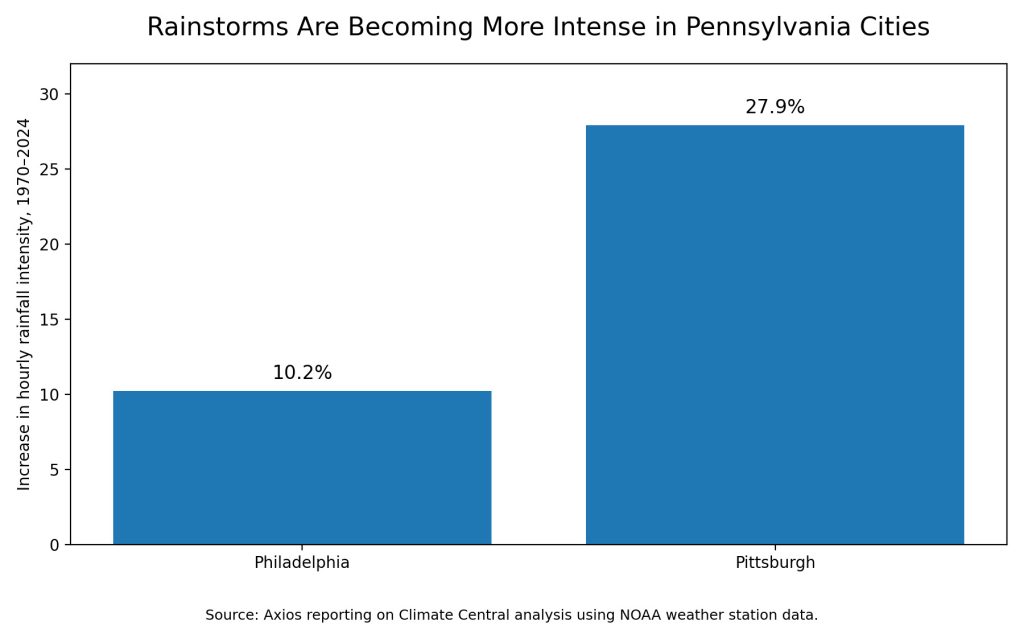
Pennsylvania has experienced increased rainfall intensity and stronger storm events in recent years. Climate summaries from regional agencies continue showing elevated moisture levels and heavier rain events contributing to flash flooding and runoff concerns throughout PA.
At the same time:
- Development continues expanding
- Paved surfaces continue increasing
- Older drainage systems continue aging
That combination creates significant pressure on both public and private property infrastructure.
Warning Signs You May Already Have a Drainage Problem
Many property owners wait until damage becomes visible before investigating runoff issues. After heavy rain, many property owners start noticing little things that do not seem serious at first. Maybe water sits in the yard longer than it used to. Maybe mulch or soil keeps washing into the driveway after storms.
We also hear from people who begin seeing damp basement areas, soft ground near the foundation, or small cracks forming near retaining walls. In some cases, parts of the property start sinking slightly or erosion begins appearing along slopes and driveways.
These kinds of changes usually do not happen overnight. They tend to build slowly over time and are often connected to larger drainage, runoff, or grading problems developing beneath the surface.
Why Early Environmental Planning Matters
One of the biggest mistakes we see is waiting too long.
A drainage issue that could have been corrected early sometimes turns into:
- Major erosion repair
- Retaining wall replacement
- Structural damage
- Parking lot failure
- Flooding cleanup
- Expensive reconstruction
Environmental planning is no longer just about appearance. It is about protecting property investments, improving land stability, managing runoff responsibly, and helping properties function correctly during increasingly unpredictable weather conditions.
At All County Associates Environmental Design Services, we help property owners throughout Pennsylvania evaluate drainage, runoff, erosion, and stormwater concerns before small problems become major repairs.
Should you want to connect, we would love to hear what is happening with your property and help you explore practical solutions that make sense for the way your land actually functions.
FAQs
What causes drainage and runoff problems on a property?
Drainage and runoff problems are commonly caused by improper grading, excessive paved surfaces, aging drainage systems, soil erosion, heavy rainfall, and poor stormwater management.
Why are runoff problems becoming more common?
In Pennsylvania, we are experiencing stronger rainfalls that are beginning to increase pressure on aging stormwater infrastructure.
What do I need to do about managing stormwater?
Stormwater management involves controlling how rainwater moves across a property to reduce flooding, erosion, runoff damage, and pollution.
When should I address drainage issues?
The earlier the better. Minor drainage issues often become significantly more expensive once erosion, flooding, or land instability develops.
Helpful Industry Data and Resources
Pennsylvania Stormwater Infrastructure Challenges
This article explains how stormwater runoff is increasingly affecting residential, commercial, and municipal infrastructure throughout Pennsylvania.
Pennsylvania Stormwater Infrastructure Challenges
EPA Stormwater Runoff Overview
The EPA explains how impervious surfaces increase runoff and contribute to flooding and erosion issues.
EPA Urbanization and Stormwater Runoff Guide
Mid-Atlantic Climate and Flooding Trends
Regional climate data highlighting increased rainfall intensity and flooding concerns across the Mid-Atlantic region.