
One reoccurring question we receive is, “I am installing a fence, and my neighbor(s) already had their property surveyed, what is the cost to survey the remaining line(s)?”
The answer to this question is not what most potential clients want to hear. You cannot survey just a single line or a couple of lines. The entire boundary should be surveyed for each property.
So, What Is a Boundary Survey?
The Quick Answer: A boundary survey is the process of identifying and marking the exact legal limits of your property. It determines the exact property lines of a piece of land using legal records, measurements, and physical markers. It helps prevent disputes, supports construction planning, and ensures you understand exactly what you own.
Old boundary markers are often inaccurate, so working with a professional surveyor gives you clarity before making any property decisions. It’s not guesswork. It’s based on recorded deeds, historical data, physical evidence, and precise measurements taken by a licensed surveyor.
Why Can’t I Just Have the Remaining Lines Surveyed?
When we tell a client that they need to survey the entire boundary, the response is often: “but we found the markers from the other shared lines.” In new subdivisions, there might be some validity to this thought. However, the surveyor is responsible for certifying the boundary. Thus, we will want to verify the locations each time.
You can’t survey just one property line because existing markers may be inaccurate or moved. A full boundary survey ensures every line connects correctly and reflects the legal property limits.
“But I Found a Corner Marker”
Another common misconception is that since you found a corner marker, that it is accurate. Over time, markers can move. The earth is constantly shifting, and soils are compressing and expanding. And little by little, those original markers can end up somewhere else.
Additionally, people may move pins to increase or decrease their property. In other cases, property owners or inexperienced contractors may move markers out of the way of some project they’re working on, not realizing what it is. This means every marker needs to be verified.
Old Markers Are Often Outdated
Even more so, the marker you found might have no meaning whatsoever. It might be from a property line that does not exist anymore. Just because you locate a buried object, doesn’t mean it is a corner marker. It might be a leftover piece of some previous fence, pole, or project.
Also, property lines today have not always existed as they do now. This means the pins from those old boundaries may exist, but they may not reflect one of your corners.
If I Must Get a Full Boundary Survey, What Is Involved?
Let’s look at the full process of performing a boundary survey.
First: Research
The process starts with research. Surveyors access public records about the property from the County Recorder of Deeds. Examples of the documents include deeds, subdivision plans, and tax maps. Not only do they do it for the subject property, but they also do it for the neighboring properties.
Then: Closing the Boundary
With this research in hand, the surveyor looks to ensure the boundary of the property closes. To do this, they have to calculate every boundary line. By only doing one line, there is no way to ensure the boundary is complete. Additionally, this process looks for conflicts with neighboring properties’ boundaries.
Finally: Field Work
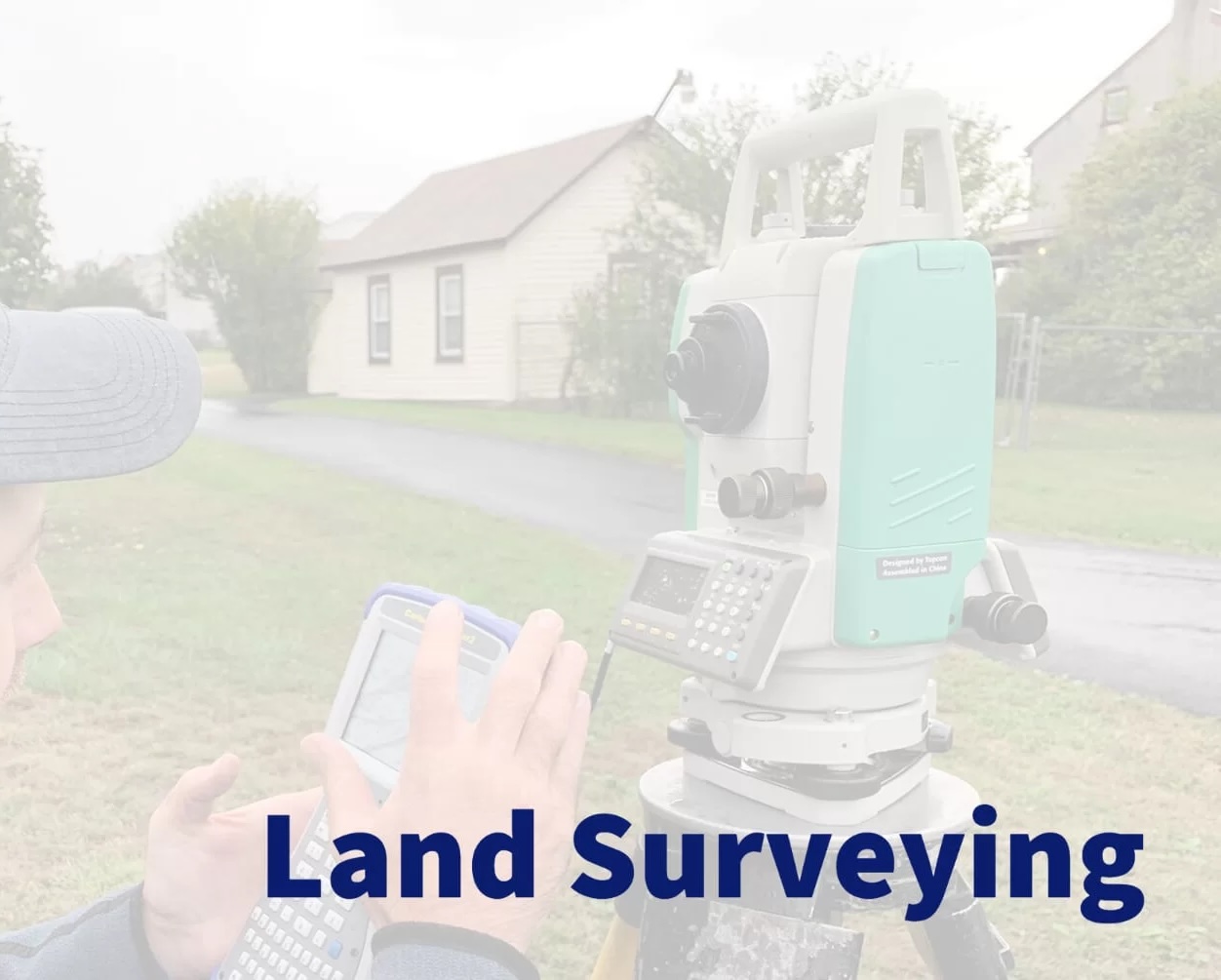
Now the surveyor begins the field work. Once on site, the surveyor uses electronic survey equipment to retrace the property lines. The surveyor will look for existing markers along the lines and at the intersecting corners. Some examples of markers are iron pipes, rebar, and concrete monuments. They verify any found marker and place a flag. If the surveyor finds that a corner marker is missing, they install it.
5 Things a Boundary Survey Can Reveal About Your Property
- Your exact legal property lines
- Whether structures cross into neighboring land
- Easements or rights-of-way you may not know about
- Encroachments from nearby properties
- Differences between recorded documents and actual land use
Expert Insight from the Field
“We’ve seen situations where people assumed they knew their property lines for years, only to find out something was off when it mattered most. A boundary survey takes that uncertainty off the table and gives you something solid to rely on.”
That kind of clarity can save time, money, and stress down the road.
How Much Does a Boundary Survey Cost?
With boundary surveys explained, the last question we hear is “Okay, so how much will it cost?”
No two properties are the same. As such, the cost of one survey is not identical to the next. That said, the average boundary survey will cost a few hundred to a couple thousand dollars.
Here are some common cost influences:
- Size – A one-acre property will cost less to survey than a ten-acre site.
- Location – Remote locations can cost more than those in suburban or urban locations.
- Time of year – A wooded property costs less when there are no leaves on the trees.
- Topography – A flat site will be easier to survey than a steep site, thus costing less.
- Complexity – A complex boundary requires extra time, thereby costing more.
Let’s Bring Clarity to Your Property
When it comes to your land, guessing isn’t a strategy.
A boundary survey gives you clear answers, solid documentation, and the confidence to move forward with whatever comes next.
Should you want to connect, the team at All County and Associates is here to walk you through the process and help you understand exactly where things stand.
Frequently Asked Questions
How long does a boundary survey take?
Most surveys take a few days to a couple of weeks, depending on the size of the property and the complexity of the records.
Is a boundary survey required when buying property?
It’s not always required, but it’s strongly recommended to avoid surprises after closing. The last thing you want is to buy a property for the great land it comes on, only to learn that land isn’t yours.
What happens if a dispute is found?
The survey provides documented evidence that can be used to resolve the issue, often preventing legal action.
How much does a boundary survey cost?
Costs vary based on property size, terrain, and research needed, but it’s a small investment compared to potential issues.
Who is ACA?
Started in 1992 and located in Chester County, PA ACA has grown to become a full-service civil engineering firm. Today, we merge professional services with practical knowledge for residential and commercial projects. No matter the scale, from installing a fence, to building a structure or developing land, you need permits. Because the approval process includes many permits and agencies, it can be a headache. Working with ACA’s full-service team saves you time, money, and headaches. Every step of the way, we are here to support you and educate you about the process. Here are some of the basic services we provide:
Construction Management | Civil Engineering | Environmental Permitting | Septic System Testing and Design | Land Surveying | Wetland Delineations and Mitigation
Please feel free to browse our website or if working on a project or need help, contact us at (610) 469-3830.
Also, join the conversation on: Facebook | LinkedIn
Share this post: